Why a Chicane Changes More Than the Straight
See how a chicane changes a racing lap: follow the approach, direction changes, exit traction, and the places where drivers gain or lose momentum.
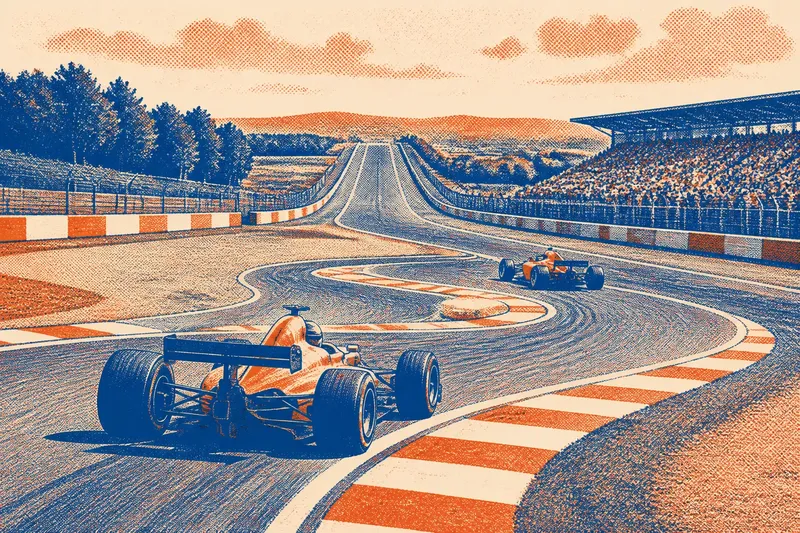
A chicane changes a lap before a car reaches its first turn. In racing, a chicane is a sequence of closely linked corners, often bending left and then right, or right and then left. Its effect travels backward into the approach and forward into the acceleration zone, giving spectators more to watch than a car slowing for a tight section.
To read a chicane, follow one car from its setup on the preceding straight through the final corner and onto the next stretch. The important story is how each direction change shapes the next one. A driver may sacrifice the first turn to place the car well for the last, where a clean exit can matter most.
Approach and setup
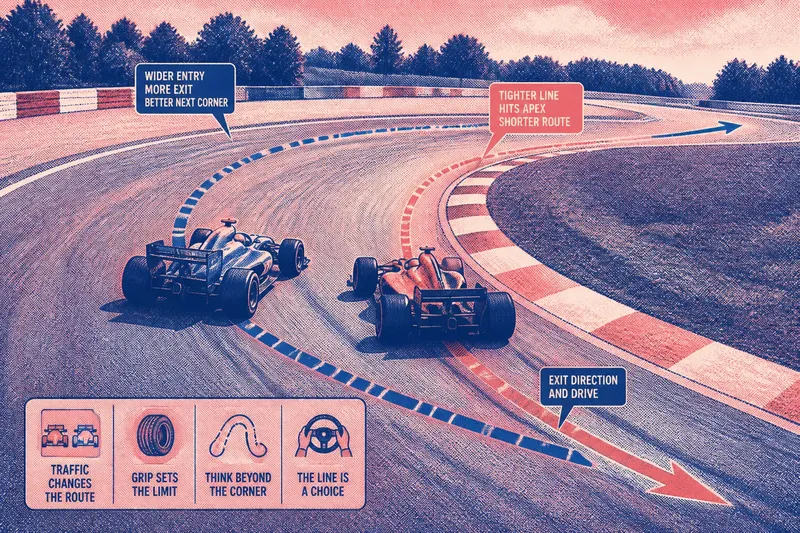
As a car approaches a chicane, the driver chooses where to position it for the opening turn. That position depends on the sequence ahead, not simply on the nearest corner. A wide approach can open the entry, but the driver also needs room to change direction and reach the next part without running out of track.
Look for whether the car moves across the track before braking, and where it begins turning. A driver who stays nearer one side may be setting up for a particular first corner; another may take a different approach to prioritize the exit. Traffic complicates the choice because a following car can limit the space available for positioning.
The braking phase also affects what follows. Braking transfers load toward the front tires, which can help the car turn, but the driver must manage that transition as the direction changes. If the car is still unsettled or turning sharply, it may be harder to make the next input smoothly.
Watch the car’s position before the first curb, not only its speed at the braking point.
The linked corners
A chicane is a linked sequence, so the first corner is not an isolated target. The driver must leave it in a position that makes the next turn possible. This can mean taking a less direct path through the opening bend to avoid arriving at the second one too far across the track or with the car pointed the wrong way.
Curbs, painted surfaces, and the available track width influence that path. A curb may help a car cut across a corner, but using it can also unsettle the chassis or leave less room for the next direction change. The visible line is therefore a compromise among turning room, stability, and the location of the following corner.
Compare the car’s attitude as it crosses the middle of the sequence. Does it settle between turns, or does it seem to snap from one direction to the other? A smooth transition can preserve momentum and help the driver place the car for the final bend. A correction, a wide arc, or a visible loss of composure can carry a cost into the exit.
Try following the front wheels through the sequence. Their direction often reveals the driver’s plan more clearly than the car’s position alone.
Exit shapes the straight
The final corner determines how the car begins accelerating onto the next straight. A driver who exits with the car aligned to the track can apply power more progressively. If the car is still turning or correcting its path, acceleration may need to wait. That delay can matter long after the chicane itself has passed from view.
This is why the fastest-looking path through the first turn may not produce the strongest run afterward. A driver can give up a little ground at the entry to arrive at the last corner with a better angle. The result is visible as a car that straightens sooner and carries speed toward the next braking zone.
Say you are watching two cars enter a left-right chicane close together. The leading car takes a cautious first turn and reaches the final right with its nose already aimed toward the exit; the chasing car cuts the first corner more sharply but needs a small correction before accelerating. The expected observable result is that the leader may begin its run earlier, while the follower’s initial position looked more aggressive.
Follow both cars beyond the exit. A gap that grows on the straight may have started with their different paths through the chicane.
What should spectators watch?
Why does one driver take a wider entry?
A wider entry can create room to turn into the first corner, but the driver may also be positioning the car for the sequence that follows. Watch where the car ends up at the final turn before judging the entry as good or poor.
Why do cars use the curbs differently?
Each driver balances a shorter path against stability and the need to change direction again. A curb that suits one car’s line may be awkward for another, depending on its position and how it approaches the next corner.
How can a chicane create an overtaking chance?
A car close behind may use the approach to challenge for space, while the leading driver may defend by choosing a different line. The opening turn can decide who reaches the next part ahead, but the exit determines whether either car can carry that position onto the straight.
Why does the gap change after the chicane?
The cars may leave with different alignments, momentum, or room to accelerate. A visible separation on the straight can reflect choices made through the entire sequence rather than one dramatic moment at the entry.
Reading the whole lap
Chicanes can also shape what happens at the next corner. A strong exit may give a driver a better approach to the next braking point, while a compromised one can leave the car exposed. The consequence depends on the circuit layout and the drivers’ positions, so track the sequence beyond the first straight rather than treating each corner as a separate contest.
For a clear comparison, pick two cars and watch the same chicane over a few laps. Notice their approach positions, how they cross the middle, and when they straighten for acceleration. If one driver changes line from lap to lap, consider whether traffic or a defensive move may explain it; the line alone does not tell the whole story.
Understanding why a chicane changes more than the straight comes down to linking cause and effect: setup influences the first turn, the first turn constrains the next, and the final corner shapes acceleration. Keep your eyes on the car’s direction as well as its speed. That small shift in attention makes the next lap’s changing gaps easier to read.